

Which Pet Accessories and Toys Can Cause Hidden Injuries?
A gentle approach to veterinary medicine extends beyond how we handle animals in the clinic. It includes helping you recognize when everyday equipment is causing low-grade stress, discomfort, or injury that nobody is connecting to the gear. Pressure on the trachea from a prong collar during walks, repetitive strain from a poorly fitted harness, dental damage from the wrong type of chew toy: these problems accumulate quietly, and they are more common than most people realize.
The Gentle Vet in West Caldwell takes client education seriously, and our team puts stress reduction at the center of every encounter. Our diagnostics help us identify the physical consequences of problematic equipment, and our dental and surgical capabilities with our board-certified surgeon mean we can treat injuries with expert care. Contact us with questions or to book an appointment. We would rather catch equipment-related problems early than deal with the consequences.
Key Takeaways
- Everyday pet equipment can cause cumulative low-grade injuries (tracheal damage from collars, dental fractures from hard chews, intestinal blockages from toy parts) that often go unrecognized until something goes wrong.
- Front-clip harnesses, properly fitted flat or martingale collars, and 4-to-6-foot standard leashes are safer for most dogs than prong collars, shock collars, choke chains, or retractable leashes.
- The thumbnail test for chew hardness is simple: if pressing your thumbnail into a chew leaves no dent, it is too hard and risks fracturing your dog’s teeth.
- Reading your pet’s body language (lip licking, yawning, whale eye, reluctance to put on gear) catches equipment problems earlier than waiting for obvious injury or distress.
What Does Your Pet’s Body Language Tell You About Equipment Safety?
Pets communicate continuously through posture, facial expression, and movement. Understanding body language helps you choose gear that supports comfort rather than masking discomfort, and helps you spot equipment problems before they cause physical injury. Subtle stress signals often appear long before more obvious distress, and once you can spot them, you will catch issues earlier.
Subtle stress signals worth knowing about:
- Tucked tail or lowered body posture
- Whale eye (showing the whites)
- Slow movement or freezing
- Avoidance of touch on certain body areas
- Lip licking or yawning out of context
Physical signs that equipment may be causing problems:
- Reluctance to put on a harness or collar
- Fur loss or skin redness in patterns that match where equipment sits
- Coughing or gagging when pulling on a leash
- Scratching at gear or head shaking
- Breath sounds that change when a collar is in place
- Neck soreness or changes in how the dog turns or moves their head
Reading body language becomes more intuitive with practice. Once you can spot stress signals reliably, you will catch equipment problems much earlier. Our team is happy to assess your pet’s body language and gear fit during wellness visits.
Why Do Veterinarians Recommend Reward-Based Training?
Positive reinforcement training builds desired behaviors by rewarding what you want to see. The approach builds trust, reduces stress, creates more lasting habits, and protects the human-animal bond, while avoiding tools that can injure the throat, neck, and spine.
A practical example: your dog pulls hard on the leash or lunges when they see another dog, called leash reactivity. The pain-based approach uses a prong collar or choke chain that delivers discomfort when the dog pulls, suppressing the pulling through unpleasant feedback. The dog learns to associate the discomfort not just with pulling but with seeing other dogs. The behavior changes are inconsistent and often worsen, because now your dog associates seeing other dogs with pain.
The positive reinforcement approach uses a front-clip harness for physical management while training calm walking through reward. Using the engage-disengage game, you reward your dog for looking at you when they see another dog. Your dog learns that staying near you and walking with a loose leash produces good things (treats, praise, continued movement). Seeing another dog equals rewards. Behavior changes are durable because the dog has actively learned what works rather than learned to avoid what hurts.
Our wellness visits are an appropriate place to discuss training challenges and connect you with appropriate resources, tools, or trainers.
Which Training Devices Should I Avoid for My Dog?
Several common training tools work by causing physical discomfort or pain rather than teaching your dog what behavior you want. Prong collars, choke chains, shock collars, and retractable leashes all carry documented risks for physical injury and behavioral side effects, and gentler alternatives consistently produce better results for both training and the human-animal bond.
Prong Collars and Choke Chains
Prong collars work by tightening around the neck and applying pressure (or pain, depending on perspective) when the dog pulls. They do not teach the dog what to do; they teach the dog what to avoid.
The physical risks documented in dangers of training collars research include tracheal damage, esophageal injury, neck soft tissue damage, increased intraocular pressure (a particular concern for dogs with eye conditions), and laryngeal trauma. These risks compound when dogs lunge suddenly or pull hard against the collar repeatedly. For small dogs with tracheal collapse, these can severely worsen the condition.
Choke chains carry similar risks plus an additional issue: they do not release pressure consistently, particularly with thicker fur or specific anatomies. The intended training effect (brief tightening followed by release) often becomes prolonged constant pressure the dog tolerates rather than learns from.
The behavioral risks are equally serious: suppression of pulling without addressing the underlying drivers, increased stress and anxiety around the trigger that prompted pulling (often other dogs or stimuli), and association of the unpleasant collar sensation with whatever the dog was looking at when it tightened. The dog who lunges toward another dog and gets corrected may eventually associate other dogs with pain rather than learning calm walking.
Shock Collars and Aversive Tools
Aversive training methods including shock collars (also called e-collars or stim collars) deliver electrical stimulation as punishment. Multiple veterinary professional organizations have issued position statements against their use based on documented welfare concerns and behavioral consequences.
Physical risks include skin burns at the contact points (more common with high settings or prolonged use) and tissue damage from the metal contacts pressing into skin.
Behavioral consequences include heightened anxiety and stress, particularly fear responses linked to whatever the dog was experiencing when shocked. Your dog who barks at the doorbell and gets shocked may develop fear of the doorbell or of people approaching the door. Your dog shocked for approaching another dog may develop aggression toward other dogs from the association.
The behaviors that aversive tools are intended to suppress often return when the tool is not being used, or transform into different unwanted behaviors driven by the same underlying motivation. Effective behavior modification addresses the root cause rather than suppressing the visible behavior.
Retractable Leash Hazards
Retractable leashes appear convenient but carry risks that are not obvious until something goes wrong:
- They encourage pulling, since dogs learn that pulling extends the leash, reinforcing the very behavior you want to discourage
- They reduce control, since 16 or more feet of cord means you cannot quickly bring the dog back when needed
- They cause cord injuries like rope burns, lacerations, and amputations to fingers when grabbed during a sudden pull
- They create wrap injuries when the cord wraps around legs
- The locking mechanism sometimes fails, leaving you without control when you most need it
For dogs who pull, alternatives that address the underlying issue are more effective than working around it with retractable equipment.
What Walking Equipment Do Vets Recommend for Dogs?
The right walking equipment supports your dog physically while making training easier rather than relying on discomfort. Properly fitted harnesses distribute pressure across the chest and back rather than concentrating it on the neck, and a 4-to-6-foot standard leash provides better control than longer or retractable alternatives.
Collars and Harnesses
Properly fitted harnesses are the safer and more comfortable choice for leash walking for most dogs.
- Front-clip harnesses have the leash attachment on the chest. When the dog pulls forward, the leash pressure redirects them toward the handler, providing gentle correction without pressure on the neck. These work well for dogs who pull and for general leash training.
- Back-clip harnesses have the leash attachment on the upper back. They are comfortable for most dogs and appropriate for those who walk well on leash, though less effective at managing pulling.
- Y-shaped harnesses designed to clear the shoulder joints allow more natural shoulder movement than harnesses that cross the front of the chest. Important for active or athletic dogs, including those frequenting New Jersey’s trail systems and parks.
- Head halters (Gentle Leader, Halti) work by controlling the dog’s head, similar to how a halter works on a horse. They can be very effective for strong pullers but require positive introduction to avoid creating aversion.
Choosing the right collar for ID and license tags also matters. Flat collars and martingale collars (which tighten partially under pressure but stop short of choking) are both safe options when properly fitted. The two-finger rule applies: you should be able to slide two fingers between the collar and the dog’s neck. Tighter risks discomfort and injury; looser risks the collar slipping off.
Standard Leashes and Long Lines
A 4-to-6-foot standard leash provides the best balance of freedom and control for everyday walks. Long enough for the dog to move comfortably, short enough to reliably manage the dog’s position and respond to situations on busy New Jersey suburban streets. Walking nicely on leash is a learned skill, and the right standard leash plus consistent training results in pleasant walks without specialized equipment.
Long line training using a 15-to-30-foot dedicated long line is a safer alternative to retractable leashes for recall practice in open areas. Long lines drag behind the dog rather than feeding through a handle, allowing the handler to step on or pick up the line as needed without being attached to the entire length.
Which Toys Pose a Hidden Danger to Pets?
Toy-related injuries are a regular reason for emergency veterinary visits. Gastrointestinal foreign bodies from ingested toy parts can require emergency surgery, and the cost (both financial and to the dog) is significant. Knowing which categories carry the most risk helps you make better choices.
The risky toy categories:
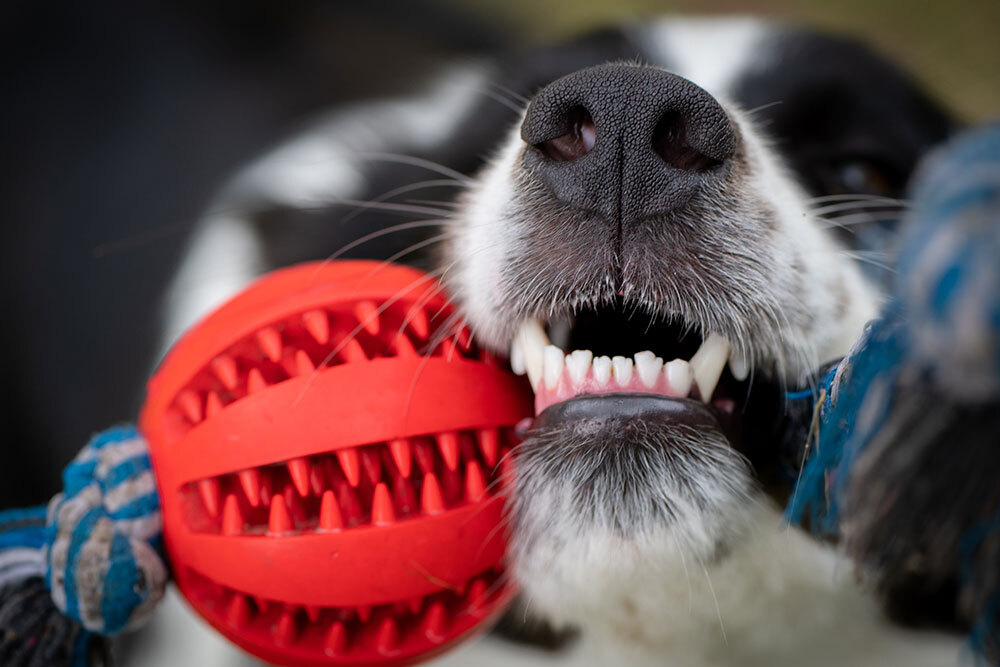
- Rope toys: strands ingested while chewing can cause linear foreign bodies, particularly dangerous because they can saw through intestinal tissue if surgery is needed
- Tennis balls and similar abrasive materials: the fuzzy outer covering acts like sandpaper on tooth enamel with prolonged chewing, and the compressed form can lodge in the throat
- Hard plastics that can crack teeth
- Stuffed toys whose filling can be ingested by aggressive chewers and cause intestinal blockages (stuffing-free options are safer)
- Toys with squeakers whose plastic mechanism can be extracted and swallowed
- Undersized toys that fit too easily in your dog’s mouth and become choking hazards
Replace toys when they show wear, supervise play with new toys to assess durability, rotate toys to maintain interest, and remove toys being destroyed faster than they should be. If your pet ingests toy parts or shows signs of distress during play (gagging, coughing, vomiting, refusing food), contact us promptly. Early intervention significantly improves outcomes for foreign body cases.
Which Chews and Treats Are Risky for Dogs?
Chewing is natural and healthy, but many popular chews cause more problems than they solve, sending dogs to the vet for fractured teeth, oral injuries, or intestinal obstructions. The category of chews to avoid includes anything harder than your dog’s tooth enamel and anything that can be swallowed in pieces that do not digest.
The dangerous chew items categories worth understanding:
- Antlers and hooves: extremely hard, commonly causing slab fractures of the premolars that often require extraction or root canal therapy
- Bones: cooking makes them brittle and prone to splintering, with splinters that can puncture the mouth, throat, stomach, or intestines. Raw bones fracture teeth easily.
- Hard nylon bones: designed to be chewed indefinitely, can be gnawed into sharp points and are implicated in tooth fractures
- Rawhide: the processed cowhide softens during chewing and can be swallowed in large pieces that do not digest, causing intestinal blockages
- Any chew reduced to a small nub: a choking and intestinal obstruction risk that should be discarded
Warning signs of a chew-related problem include sudden refusal to eat, dropping food, pawing at the mouth, drooling, blood in saliva, vomiting, and lethargy. Any of these warrant prompt evaluation; we offer urgent care visits for dogs and cats in West Caldwell during our normal hours.
What Are Safer Toy and Chew Alternatives?
Plenty of safe enrichment and chewing options exist; the trick is knowing what to look for. The thumbnail test is simple: if pressing your thumbnail into a chew leaves no dent, it is too hard for safe chewing. Anything softer than your dog’s tooth enamel, sized appropriately for your dog, and free of small detachable parts is a reasonable starting point.
- Rubber toys designed for chewing
- Durable rubber toys that can be stuffed with treats for additional engagement
- Plush toys without small parts (for dogs who do not destroy stuffing)
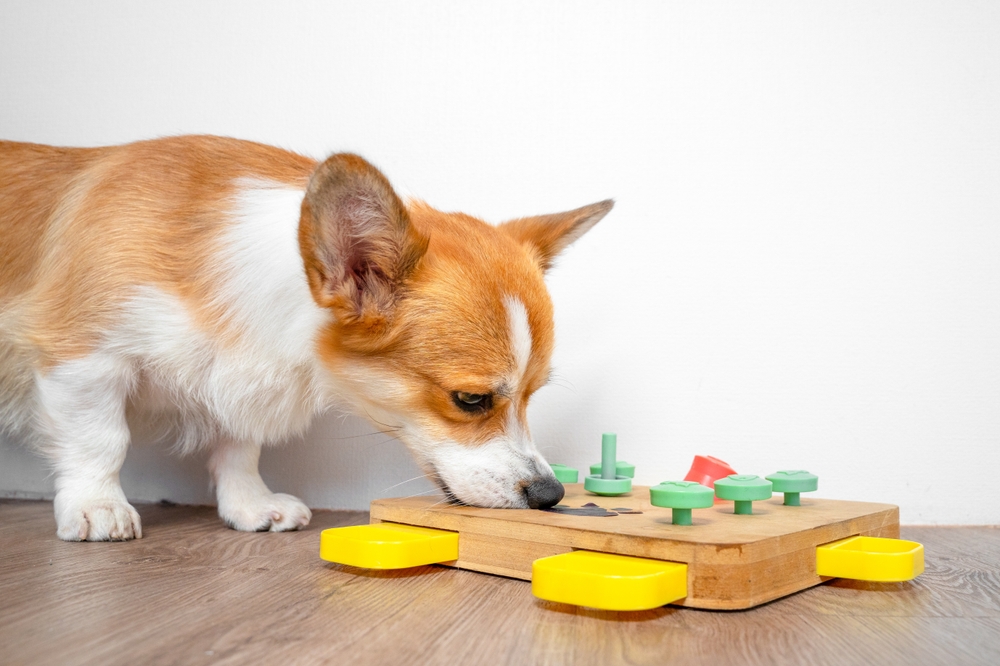
- Puzzle feeders that engage the brain without intense chewing
Safer chew options with the VOHC (Veterinary Oral Health Council) seal indicate proven dental benefit. Our pharmacy carries dog dental chews and treats that combine safety with oral health benefit.
Practical tips for safe enrichment:
- Rotate toys to maintain interest
- Supervise play with new items until you know how your dog interacts with them
- Choose softer options for puppies whose teeth are still developing
- Match chew durability to your dog’s chewing intensity
- Replace items as they wear
For chewers who go through everything quickly, frequent supervised replacement is part of the cost of owning that particular dog. Trying to find an “indestructible” chew often leads to dangerous options.
When Is Behavior the Real Reason Equipment Isn’t Working?
Equipment and toy choices alone rarely fix behavior issues. The dog who pulls dramatically on a flat collar and is “fixed” by a prong collar may simply be tolerating discomfort while the underlying anxiety, excitement, or undertrained walking skills remain unaddressed.
Anxious or reactive pets need gear that minimizes physical stress (well-fitting harness, comfortable leash), a behavior modification plan that addresses the underlying drivers, sometimes anti-anxiety medication as part of the plan, and patience and time for change.
Sudden behavioral changes including new destructive chewing, increased aggression, or significant shifts in behavior can sometimes have medical causes (pain, neurological issues, thyroid disease, others). Our wellness and preventive care for pets in West Caldwell includes thorough evaluation when behavior changes appear. Ruling out medical contributors is part of any comprehensive behavior plan.
Frequently Asked Questions About Pet Equipment and Product Safety
What harness type is best for my dog?
It depends. Strong pullers often benefit from front-clip harnesses or head halters. Active dogs benefit from Y-shaped harnesses that clear the shoulders. Comfortable walkers do well in back-clip harnesses. Our team can help you match a harness to your dog at a wellness visit.
My dog has been wearing a prong collar for years without obvious issues. Should I still switch?
Long-term use can cause cumulative damage that is not visible. Even without obvious injury, the behavioral consequences (increased anxiety, association of triggers with discomfort) often exist. Switching to humane equipment plus appropriate training produces better long-term outcomes.
Are there any chews that are completely safe?
Nothing is completely risk-free. Softer dental chews appropriate to size, rubber toys designed for chewing without sharp edges, and supervised chewing of appropriately sized items minimize risk significantly. Choosing VOHC-accepted products provides the most reliable safety profile.
What should I do if my dog swallows a toy or chew piece?
Contact us promptly. Some swallowed items pass through without issue; others cause obstruction requiring emergency surgery. We will discuss specifics based on what was swallowed and your dog’s symptoms.
How do I know if a collar fits properly?
The two-finger rule: you should be able to slide two fingers between the collar and your dog’s neck. Tighter risks discomfort and injury; looser risks the collar slipping off. Our team can verify fit at any visit.
Making Safer Gear Choices for Your Pet
Informed product choices protect physical health, support positive behavior, and strengthen the human-animal bond. Avoiding unsafe products prevents painful and costly emergencies that nobody wants to face.
Our team is available for personalized recommendations based on your pet’s size, behavior, chewing style, and medical considerations. Request an appointment to discuss equipment, toy safety, or chew selection, or to address any concerns about your dog’s current gear.